How To Start A Blog In 2021 Create A Blog In 20 Minutes (Blogger)Beginners
How To Start A Blog In 2021
कैसे 2021 में एक ब्लॉग शुरू करने के लिए
20 मिनट में एक ब्लॉग बनाएँ
You're looking for a quick guide to starting a blog?
The step-by-step guide to building a blog with the most basic programming skills in just 20 minutes.
You will have a lovely blog ready to share with the world after finishing this guide.
This guide is intended for beginners in particular. I'll walk through you every step and make it transparent with a large number of images and videos.
Simply send me a message and I'll do my best to help you out when you are lost or have questions.
Ready to start? Click here to skip the intro and start building your blog now
My name is Suraj Singh, and today's blogger I will teach you how. Since 2020, I've created blogs and websites. I started a number of my own blogs at that time and helped several others do the same.
I know it can look daunting and intimidating to start a blog. This free guide will show you how to become a blogger with only the most basic programming skills and is all about blogging for beginners. So, you can create your own blog in 20 minutes, whether you're 8 or 88.
I am not ashamed to admit that when I was first learning how to build a blog I made a ton of mistakes. You can benefit from more than a decade of my experience so that you don’t repeat these same mistakes when you make your own blog. I created this free guide so that a complete beginner can learn how to blog quickly and easily.
So, just how do you start a blog?
Learn how to create a blog in about 20 minutes following these steps:
How to Start a Blog in 6 Steps
- Pick a blog name. Choose a descriptive name for your blog.
- Get your blog online. Register your blog and get hosting.
- Customize your blog. Choose a free blog design template and tweak it.
- Write & publish your first post. Share your thoughts with the world. The fun part!
- Promote your blog. Get more people to read your blog with proper marketing.
- Make money blogging. Choose from several options to monetize your blog.
Should you start a blog?
One of the misunderstandings about starting a blog is that you have to be good as a great blogger. There should be nothing more than the facts. Many people read blog sites to take a personal look at problems, so many bloggers write casually and conversationally.
And thanks to the format, many popular bloggers are going to write on the same blog on a range of topics.
Moreover, you should not be a specialist on any subject you write about to have a successful blog. Those who attend a cooking blog, for example, don't want to read a food scientist's book, they want to hear the stories of someone who cooked real meals, mistakes and all.
To be successful as a blogger there is really just one requirement: a passion for your topic.
Blogging focuses on sharing with the world of your knowledge. Writing about things you enjoy makes it so much easier to start a good blog. As long as you write about stuff you really care about, your enthusiasm will come through and interest your guests.
Then why are you going through blogging trouble? There are several explanations for this:
- Share your story. You can get a voice and listen to a blog. If you like, you can share your story with the whole world. The blogger writes about his everyday life in a newsletter, one of the most popular ways blogs are used to make friends, family, or others a part of their lives.
- Make money from home. If done correctly, blogging can be very lucrative. Obviously, the world's top bloggers earn a lot, but even a part-time blogger can expect to make a decent profit if things are right. It is better than blogging as a source of passive revenue, as you can compose a piece of content just a few hours a week and then take advantage of it long after it is written. Later in this guide, I will go into much detail on how to blog money.
- Recognition for yourself or your business. No, possibly because of your new post, you won't have paparazzi trailing you. But your idea becomes a reality with a popular blog, which will earn you a lot of exposure in your fields. Many bloggers are only recognized for their posts, and some have also won books and films based on their blogs.
- Find a community. It is interactive to blog in its heart. You're writing a post and people are commenting on it. This is a perfect way of engaging people with the same thing that you are interested in. Blogging helps you and your followers to educate these people based on your experience.
Ready to begin? Click here to go to Step #1 of the guide
What is a blog anyway?
Simply placed, a blog is a type of website primarily based on written content, also known as blog posts. We hear about news blogs or celebrity blogs in popular culture, but as you can see from this guide, you can start a good blog on any conceivable subject.
Bloggers also write in a personal way that enables them to relate to their readers directly. Also, several blogs have a "comments" section that allows visitors to match the author. Interacting in the comments section with your guests allows the blogger and the reader to interact.
This direct link to the reader is one of the key advantages of starting a blog. This connection enables you to communicate with other like-minded people and exchange ideas. It can also boost your readers' trust. With your readers' confidence and loyalty, you will make the money out of your blog, as I address in this guide later.
The good news is that the Internet is currently explosive. There are more people online than ever. This growth boom would contribute to more prospective blog readers. Briefly, if you want to start a blog, then there's no time better than right now.
Let’s start your blog!
Step 1: Pick a blog name
If you are not sure what to name your blog, or what topic to blog about, skip to the next section.
If you’ve already got an idea for the name of your blog, you can check to make sure that no one else has already registered it:
See if your blog name is available:
Note: You cannot use any spaces or punctuation other than dashes in a domain name.
If you find that the name you wanted is already taken there are a few things you can do:
- Try a different domain extension. If the .com version is already registered you may still be able to get the .net or .org version of the name.
- Add small words. Words like “a”, “my”, “best”, or “the”. For example, this site is called TheBlogStarter.com instead of BlogStarter.com.
- Add dashes between words. For example, ab.com
How to Choose a Blog Topic & Name
If you don’t have an idea for a name already, the first step is choosing your blog topic.
If you’re not sure what to blog about, there are a few ways to find a good blog topic:
- Life experiences. All have lessons learned from the experience of life. In similar cases, sharing this information can be immensely beneficial to others. I helped a woman recently launch her blog to be a wife of the firefighter, for example. She has a lot of experience and awareness about this subject and in similar circumstances, it has helped her to interact with others. Think of the stuff in life you've seen. This could apply to the family (e.g. a blog about a stay at home), a job (a blog about consumer experiences), or other life experiences (a blog about coping with trouble or divorce, or a happy one). time such as preparing for a wedding or the birth of a child).
- A personal blog. You are all about a personal blog. It contains a range of subjects, from things you do every day to spontaneous ideas and reflections. This is an excellent way to share your thinking with the world without just sticking to one topic.
- Hobbies & passions. Hobbies or other passionate interests are an ideal starting point. All classic examples include food, travel, fashion, sport, and vehicles. But even blogs of darker hobbies will work, as the Internet basically means that your audience is everyone in the world.
It is time to pick your blog name, also called the domain name, once you have a subject.
A good blog name should be descriptive so that potential visitors can instantly tell what your blog is about just from the name.
You would certainly want to include this when you select the domain name if you blog about a particular subject. However, don't try to hold on just a word. A cooking blog, for example, does not always have to contain the term "cooking." The words 'food,' 'recipes' and 'meals' also make it clear that your blog deals with cooking.
I advise you to use your name, or any change to that because your blog is all about you if you intend to create a personal blog with different products. I own the scottchow.com site, for example. If you notice that your name is already taken you may add your middle name or middle initial. Or you could use a variation like “blog explore Blog” or “Blogging with blog explores”.
Can’t decide on a good name for your blog? Contact me and I will help you personally (for free)!
You will have to pick a domain extension until you have any name ideas.
The most favored is the.com domain extension, but it also fits with.net or.org. Furthermore, it is important to remember that you cannot have space between words for the purposes of a blog domain. Therefore, blogging with ABC is bloggingwithabc.com
Step 2: Get your blog online
Now it's time to get your blog online now you have a name selected. It could sound complicated or technical, but the steps below will make your process simple.
You need to host blogs (also called Web hosting) and blogging software to upload and run your blog. The good news is that the packages are normally packaged.
A blog host is a business that stores and delivers all the files on your blog when it is entered into your blog name. For a blog, you need a blog host.
You must also have your blog software. In this guide, I'll show you how to create a blog with WordPress blogging software, which is the most popular, personalized, and user-friendly one.
BlueHost is the Web host that I will suggest, and the one I will teach you how to use it. I use BlueHost myself and recommend it to all new bloggers because:
- They will register your custom domain name for free, making sure no one else can take it.
- They have a 30-day money-back guarantee if you are unsatisfied for any reason.
- They offer a free, automatic installation of the WordPress blogging software (which I show you how to use in this guide).
- They offer reliable web hosting that has been recommended by WordPress since 2005 and they currently host over 2 million blogs and websites.
- They have helpful 24/7 customer service via phone or webchat.
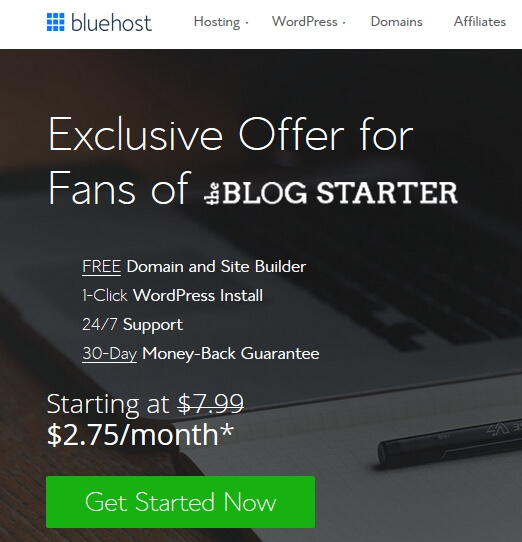
Use any BlueHost link on this site by January 18th to make sure you get the special MLK Day Sale price of $2.75 per month.
Disclosure: BlueHost compensates for The Blog Starter when you purchase through this link, so my services are free of charge to you! In fact, if you have any trouble at all setting up a blog with this tutorial, just contact me and I will do it for you (free!).
1. Click here by January 18th for the MLK Day Sale price of $2.75 per month on BlueHost and then click “get started now”.
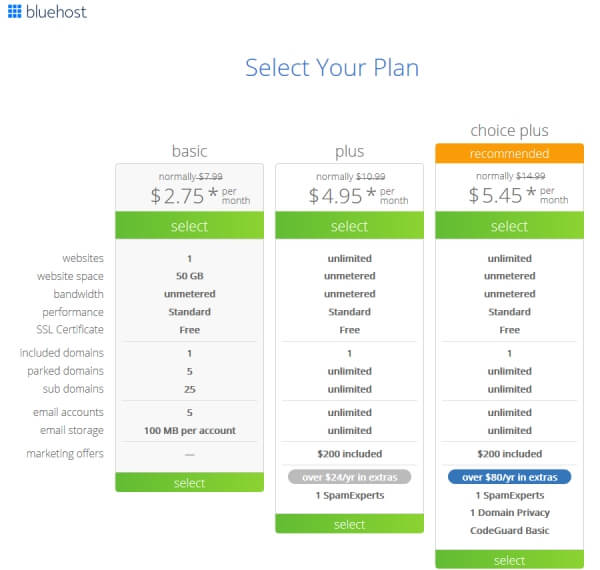
2. Select your plan. I recommend that beginning bloggers get the basic plan. Click “Select” to choose your plan.
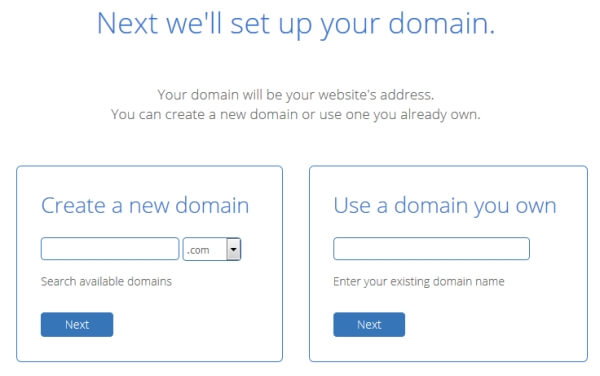
3. Type in your domain name in the left box and then click “next” to start the registration process.
- If you already own a domain name and want to use it for your blog, type your existing domain in the right box and then click “next”. Only use the right box if you have previously paid to register a domain!
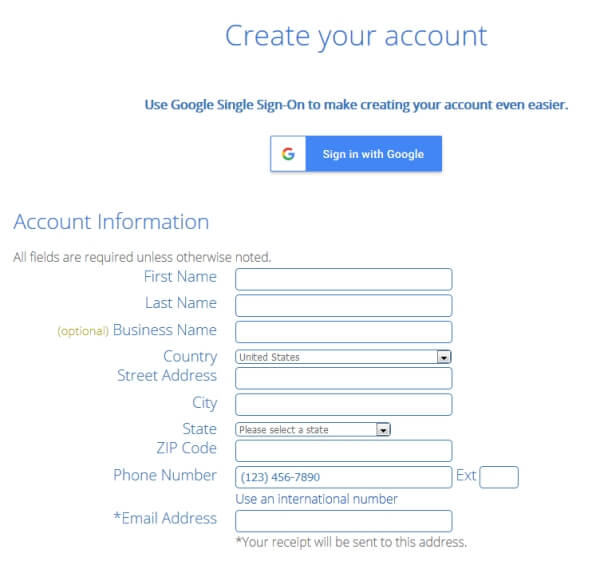
4. Fill out your billing details on the registration page.
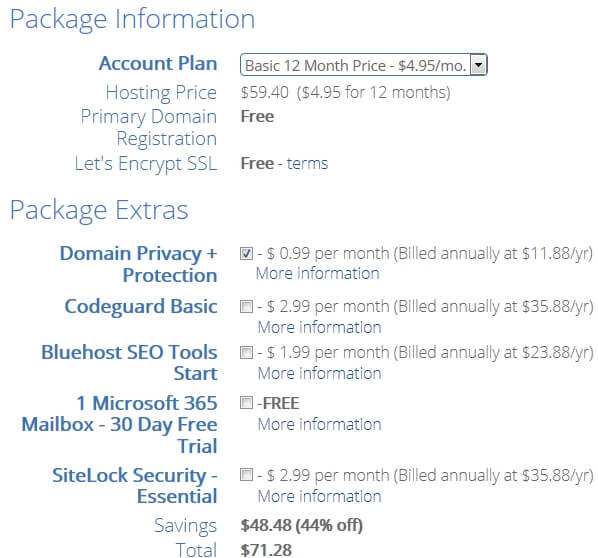
5. You will also need to choose your hosting package and options.
- Every plan has everything you need for your blog to run, including your free custom domain name, quick installation of WordPress, web hosting, and custom emails (e.g. yourname@yourdomain.com).
- You get the lowest monthly premium for the 36-month plan and lower up-front costs for the 12-month package.
- Except for "Domain Privacy & Protection," I uncheck the boxes beside the package extra. Domain privacy does not, however, keep your personal data (name, address, phone, email) secret from the registered domain owners' public database.
6. You will then need to create your BlueHost account and password.
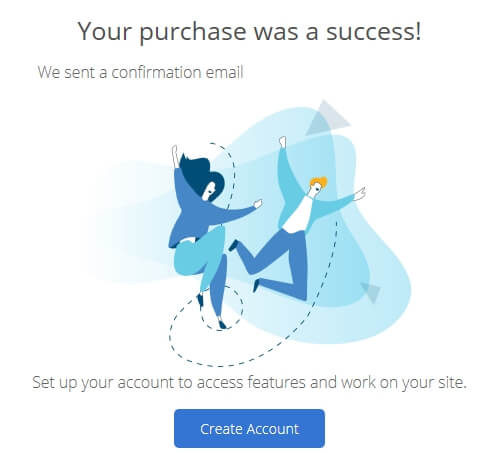
Once you do that you will be taken to an installation helper. Since you are following this tutorial you can just click “Skip this step” on the next few pages to be taken directly to the dashboard.
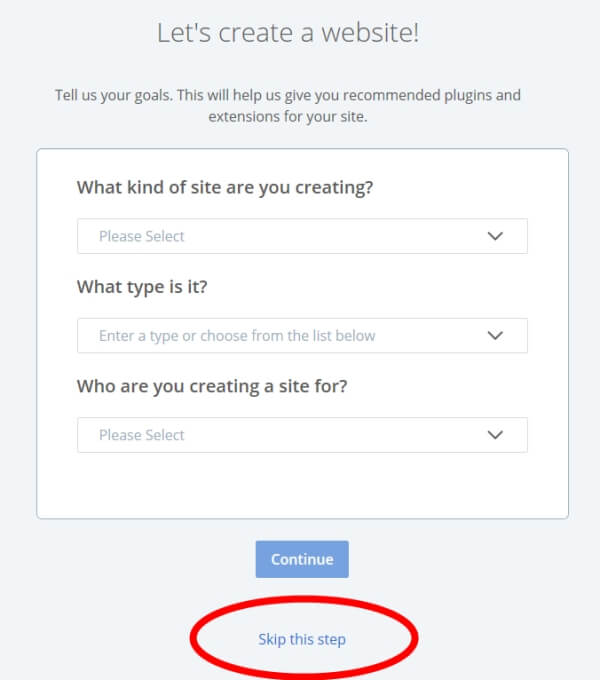
7. Install the WordPress blogging platform.
The machine will now automatically install WordPress. Upon completion of the download, click the blue "WordPress" button to log in to your blog's administrator.
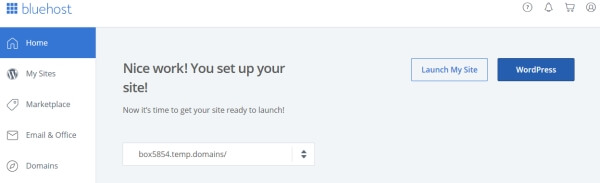
Having trouble installing your blog? Get help here.
Step 3: Customize your blog
How do I start a blog? You can watch me build and customize a beautiful blog from scratch here:

The above video should answer a variety of questions you may have about creating and customizing a blog. Here are some of the stuff I show on the video, which is breaking down step by step.
Logging in
If you have not logged into Bluehost.com already, go to the top right of Bluehost.com to access the login page. The previous move helps you to log into your domain name and password. If your password has been lost you can reset it by clicking on the "Password forgotten" page.
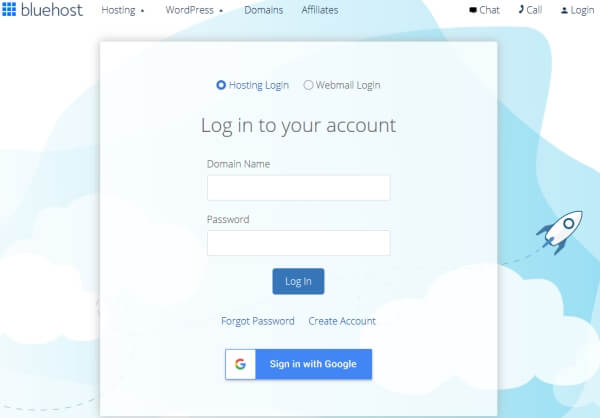
Once you log-in you will be taken to your BlueHost Portal. From the portal, you can click the blue “WordPress” button to be logged-in automatically to your WordPress blog.
Changing your blog design
You are in the WordPress dashboard once you log in. You can edit your blog. You can do some modifications.
Everybody has a different idea of how their blog looks like. One of the best things about WordPress is that with just a few clicks you can alter the whole template and layout.
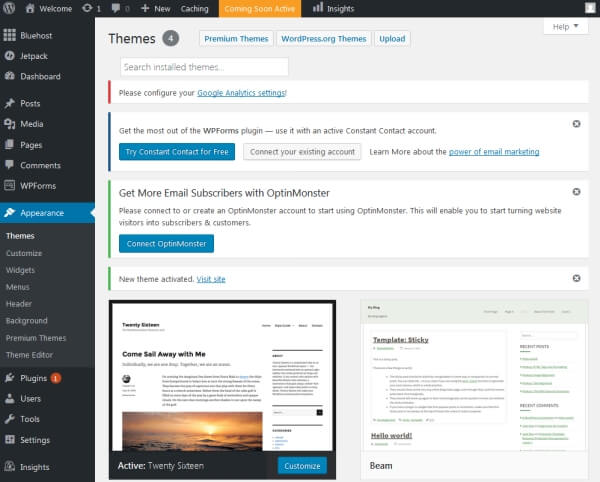
Blog templates are called "themes" in WordPress. What's the subject of the blog? Themes handle your whole WordPress blog template. You'll press the "Apartment" tab on the left-hand menu to modify your style.
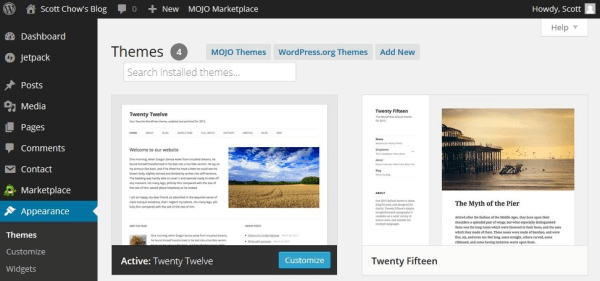
See that you are already installing some free WordPress themes on your blog: 27, 26, etc. These are clean-looking, well-designed themes that can work with almost any blog type. Many of the best bloggers in the world are currently using one of these themes.
I recommend you use one of these topics if you don't have a very unique template in mind for your blog. Let's use the WordPress subject for our example "Twenty Sixteen." Turn on the topic on your site and click "Activate." To move the theme to your blog. This is it! This is it! With just one click, you've changed the whole blog style!
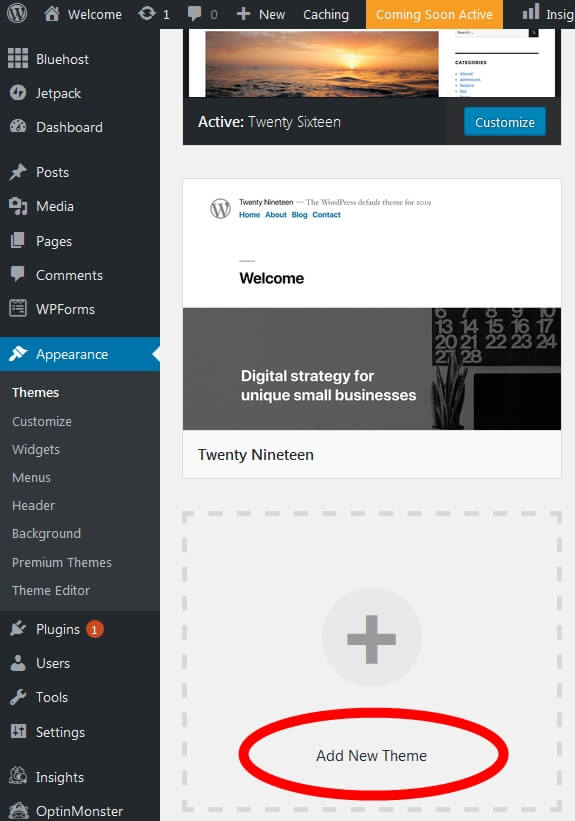
You can easily pick from thousands of other free WordPress themes if you do not like any of the themes that have already been built. Click on the "Appearance" tab in the menu on the left and then press "Add New Theme" to install a new WordPress theme.
This is the search screen for the WordPress theme. Thousands of subjects are to be selected. At any time you can easily trigger a new WordPress theme to alter your whole template. I suggest you use the "Popular" tab to find a subject that you wish and start browsing. Click the blue "Install" button when you find one you want.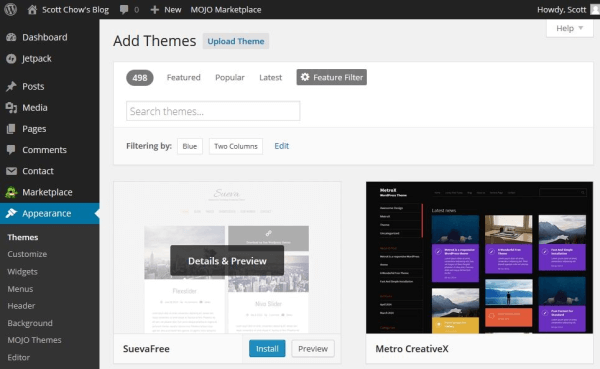
When the topic is set up, click the "Activate" button to activate your blog theme. Go to your blog and take a look to see your latest subject in motion!
The best way to personalize your WordPress blog is to change your theme, but you can make several other changes. The video above is also available to see me personalizing a WordPress blog from scratch.
Step 4: How to write a new blog post & publish it
Now it's time to really make some blogging! Your blog is going! Let's develop your first content component.
Tap "Posts" in the left menu.
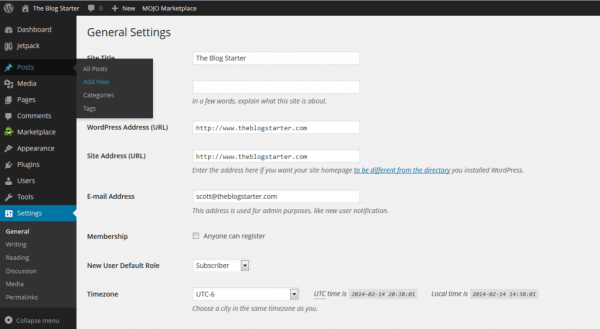
There's a post already there, you'll see. This is a regular message on each new WordPress blog, and we don't need it. To uninstall it, just below the post-press "Trash."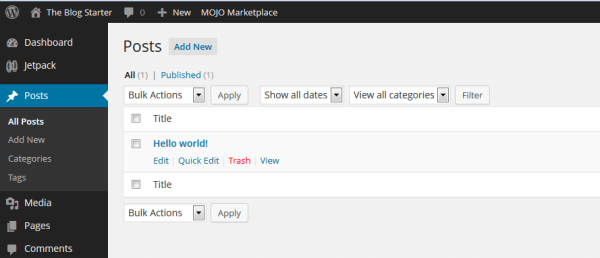
To begin writing a new post, click the “Add New” link.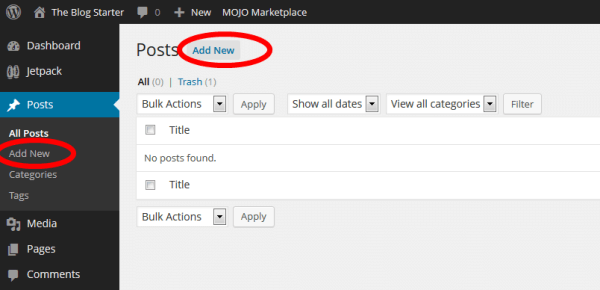
You're now on the computer of the post editor. Enter your post's title in the top box then start writing in the bottom box.
Click the 'Add image' button and click "Upload" to upload an image from your computer. You'll want to add an image to your message. On the next screen, you can change the image size. Click "Insert in the post" if you are ready to add a picture.
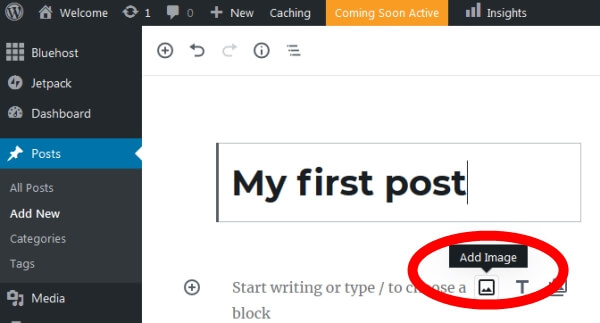
Once you have finished your post just click the “Publish” button on the top right side of the screen to publish the new post.
Content That Should be on Your Blog
You should provide your blog with two major types of content: static and dynamic content.
Static Content: Your blog should provide a couple of needed pages designed specifically to provide the visitor with the necessary resources. The content of these pages is static, which means – the content is not changed or not frequently, at least. These are mainly top-level pages accessible through your blog's menu.
These static content pages should be in place long before your blog is launched.
Including essential static pages:
- About Me (Us) – A biographical overview of both the writers and a mission statement should be included on this list. Think of the answers to these questions: how did you grow your passion for the subject? What would you want the world to convey? What's the ultimate objective?
- Contact Me (Us) – A contact page offers visitors a place to contact the author, who then assures them of being a true and open author. You can add your physical address, telephone, and personalized e-mail address. Or, to keep your personal details confidential, you can use a simple contact form. Links to all your profiles on social media should be also available here.
Apart from your blog, normally mentioned on the homepage, these two main pages should be visible and conveniently accessible at the top of your (heading) menu. You will see how these pages are included in the header menu from the top of this list. Refer to this comprehensive manual for your blog menus to be adapted if you need assistance.
Other static pages that are equally as important but less commonly thought of are:
- Disclaimer Page: You must explain how you plan to produce income if you want to make money for your blog. This is an absolutely important page not to be ignored in compliance with FTC directives. This relationship needs to be divulged, for example, if you discuss and endorse a product and benefit from connecting it to the product.
- Privacy Policy: You must add a privacy policy tab, which will tell visitors precisely how you gather data, how you use it or whether you share this data, whether you obtain information from their visitors in any way. A privacy policy needs to be enforced while you are implementing Google Adsense or a Google Analytics account. The CCPA and the GDPR (General Data Protection Regulation) mandate this page to be included on the WordPress blog by default.
- Terms of Service: It is a good idea to have a service terms and conditions page to lower your future liability when your blog run a shop or offer services as well.
Depending on what is relevant to your blog and company, you can choose to include other static pages. Examples of the typical static page are an advertisement page for the requester of paid advertising, a donations page, a resource page for guiding visitors to your favorite links, and a content and ideas page.
Dynamic Content: Your dynamics are your blog and the material you have to offer the most important. You will add your brand of insightful information to the site, as the author, providing your audience with informative tips, facts, opinions, and stories. That's how you interact and keep your guests coming back.
At certain intervals, the blog material should be submitted daily. It will never develop a follow-up for waiting months to create content. It will help to develop your brand if you post content weekly and drive traffic to these posts.
How to write great blog content
Each post must belong, convincing and insightful. It's not always easy to come up with new blog ideas regularly and you can mix the tone and even the topic to keep things alive. After all, it's your place. But every piece of content should try to include many elements.
Define the Content: Build an exciting post title that promotes curiosity and clicks. To make the subject of your article clearly identified and to offer a hook to sustain readership use the first paragraph of your post.
The Longer the Better – But Break It Up: The more specifics and knowledge you contain, the better. However, if you have a mile of long paragraphs in the content, visitors tend to skim and appear faster than they have arrived. Guests appreciate hustle and bustle. Keep your paragraphs short and include intermediate spaces, use lists, and stand-alone guides, use pictures, and always have captions and subheadings so you can find what you want.
Engage The Reader: At the end of every post, a popular method for inviting visitors would ask your audience a valid question and ask them to answer the comments. This simple calculation will multiply the dedication by ten.
Original Content: You still have to be unique with your content. Never plagiarize – you'll be found out and even face consequences. Your material, your brain, knowledge base, and experience should come from your heart. In your area, you can get themes from others, but make sure that your content comes from you.
Original Photos: While it is easy to use stock photos from free pages, the inclusion of your own photographs and graphic work is even better. Another concept is to use a free photo editor to take free photos.
Edit Your Work: The contents of your blog should be edited enough. Nothing says several typographical and grammatical mistakes that are unprofessional. Consider using a write application for a couple of refresher courses in Grammar.
Publishing Your Blog
You will still see a placeholder page even after you've posted a message on your blog.
When your blog is ready for release for the first time, simply click on the "BlueHost" menu in your WordPress dashboard at the top left of the menu and click on the blue 'Open' to delete your placeholder page and launch your blog.
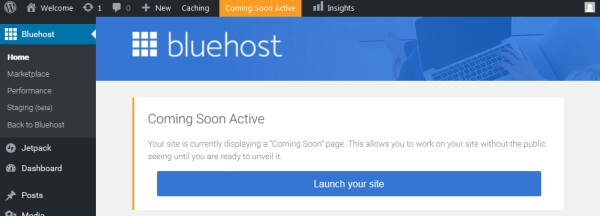
Congratulations! You now know how to start your own blog and publish content!
Step 5: Promote your blog
Only the beginning is the development of a well-designed blog and great content. You will need to spend some time promoting your blog to get traffic to it, in particular when you start.
The following tactics will help you attract more readers to your blog. You don't have to use any techniques – try some and see what's right for you.
Innere Circle Alarm
Your inner circle is the very first people to get to know your blog. This includes relatives, acquaintances, and friends. Encourage them to follow, ask them for your latest blog and, above all, thank them for it.
Use Social Media

You also want to build accounts with biggies, including Facebook, Twitter, YouTube, Pinterest, and Instagram while not having to overdo that. You should publish a link to your newest content, but also to other sources that may be of interest to your readers. Remember to use hashtags and to connect with your fans!
One of my favorite ways to meet my blog readers is by sharing links on my social media, such as Facebook and Twitter. It's cool because not only do your friends see the connection, it will automatically increase your visitors as your friends share the link with their friends. If you have created high-quality content on your blog then social media is a way for your blog to go viral.
Comment on Other Blogs
Look for and connect with other blogs in your culture. Introduce yourself and leave insightful and positive remarks using the comment section. Many of you can leave your blog with a connection. You will quickly find yourself in their ranks following the development of ties with prominent bloggers in your culture.
Engage with Your Visitors
Often get in touch with your followers when commenting on your blogs. Answer your comments and concerns, give them "likes" and statements. When it is clear that the author is concerned with his/her culture, visitors are encouraged to return.
Collaborate with other bloggers
Engaged by engaging with supportive members of your profession in your blogging community. Working together, guest articles are written, blogs and goods are promoted, and commentaries and social media connect periodically.
Post Regularly
Regularly post material. Set up and adhere to a publishing schedule. At least once per blogger is a good blogger. You will lose your followers if there are long gaps between posts and your development will be seriously impeded. It's not easy to write, but you absolutely need to adhere to that.
Create an Email List

You would also want to make sure your current users return to your blog, in addition to bringing new visitors to you. Email marketing is an integral aspect of this. You can then alert them when new content is posted on your blog by collecting your visitors' email addresses (with their permission, of course). In addition to allowing you more followers over time, this encourages people to rejoin your blog, which also allows you to create deeper links with your guests.
Email marketing is too broad to cover here, so for those who are interested, I have developed a separate email marketing guide (hint: every blogger who wants more readers needs to read this guide).
Develop the blog for the search engine
You would like to see your blog in the search results as soon as possible.
Google: Log in and open the Google Webmaster Search Console. To add a blog and follow the blog's add-on behavior, click on "add property"
Bing: Log in for your Bing Webmaster account and add your blog.
You submit your blog as the first step to search engine optimization (SEO). Please be aware that you can only start your traffic with a brand new blog. However, this will change over time, provided that you add relevant and informative content continuously.
Every blog page should contain these key elements to optimize this process:
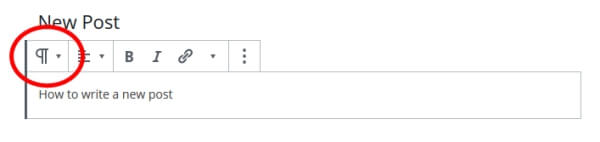
- Header Tags: Header tags should be bundled into headers and subheadings of the segment. To do so, click on the block to the left of the block and change it to "Heading." Then you can choose H1, H2, H3, and so on.
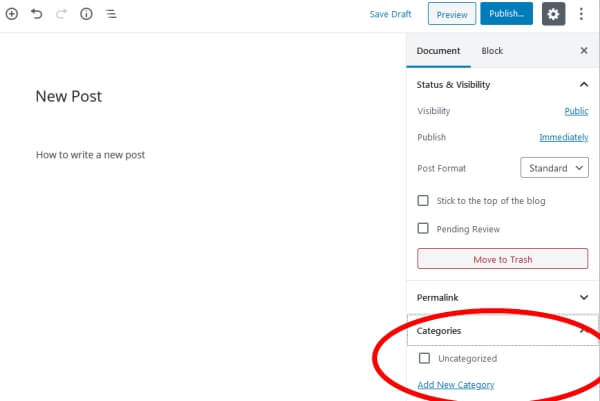
- Categorization: Your content should be grouped specifically into various categories. Click "Document" in the right menu and go to "Categories" and "Add New Category" in the post editor screen.
- Permalinks: The end portion of the URL is every blog post "slug." You want to ensure that every post has a slug identified and does not end with an item number. You can easily adjust this by heading to "settings" -> "permalinks" in your WordPress dashboard. Choose the option "Post Name" and press "Save Changes."
There are several additional variables, such as the installation of the Yoast WordPress plugin, but these will boost your search rankings sooner rather than later.
Step 6: Make money from your blog
When you have tried to build amazing content on your blog and promote it, it's actually easy to make money off your blog.
Blogs have the potential to be highly profitable but don't expect that in the first week or even in the first month you can start making money. A steady stream of revenue could take six months up to a year. Blogging needs effort, but as soon as your audience is sufficiently large, you can use many ways to monetize your blog.
Sell advertising space
Once you have a famous site, marketers can hit you for ads. Google Adsense is the perfect way to benefit from this situation. All you have to do is put the Google Adsense code on your blog to open ads. Google identifies the advertisers you want. Google Adsense takes everything from hard work to just cut a check.
I am going through a full description of how to set up your WordPress blog here with Google Adsense.
Sell affiliate products
An affiliate program is an advertisement commission. If you click on a link in your blog, one of your readers will be sent to the website of an advertiser and you will get a commission if they buy it. Membership connections are a good way to gain money by leveraging product feedback. You must note, however, that you are a product affiliate.
Selling Products and Services
It is an excellent way to raise your income to market your own goods and services right on your blog. With your blog rising and a wider audience beginning to see, your goods and services start selling.
Use your blog's sideboard to increase the exposure and connect to your storefront page of what you sell using visual images.
Sell digital downloads
The most widely consumed multimedia materials sold by bloggers are ebooks, video tutorials, and e-courses. You can keep the price low and welcoming with little or no overhead and no cost of shipping.
An ebook can write itself functionally if you are extremely knowledgeable in your area. You could surprise yourself, give it a try!
Sell memberships
Another way to make money is to build affiliate options on your blog. This means that only paying members can provide members with more exclusive content. For example, you might provide unrestricted downloading of digital products, free consultations, a private network or website for mixing or mixing groups, and member-only private content.
A blog can take advantage of success and traffic in several ways. The way your blog is monetized depends on your priorities and your blog's intent. For example, those who sell services, physical products, and digital goods do not want to engage in affiliate programs, in which traffic can be lost to another site.


Comments
Post a Comment
Please comment below your thoughts and let me know if you have any doubts.