9 Best Free Blogging Sites to Build Your Blog for Free in 2021: Tested, Compared and Reviewed(Blogger)
Looking for free blog sites to help you get interested in writing with the world? We've built ten fantastic websites where you can start a blog for free if you just want to share updates with your family and friends or whether you wish to start a blog and develop a larger audience.
We'll also try to direct you to the platform you need so you can simply create a blog for yourself free of charge. This is what you must know:
 You can create a website from an easy-to-use interface by providing a free domain name for Bluehost. An SSL and additional features are available without any modifications being limited. You are the sole owner of your website, which for many other sites is not normal. You get deals as low as $2.95/month for 36 months straight with their entry-level scheme.
Best free blog sites to consider in 2021
Here are the best free blogs to start your own blog today:
1. Wix (www.wix.com)
 Best for…non-techies who want some “regular website” functionality along with a blog.
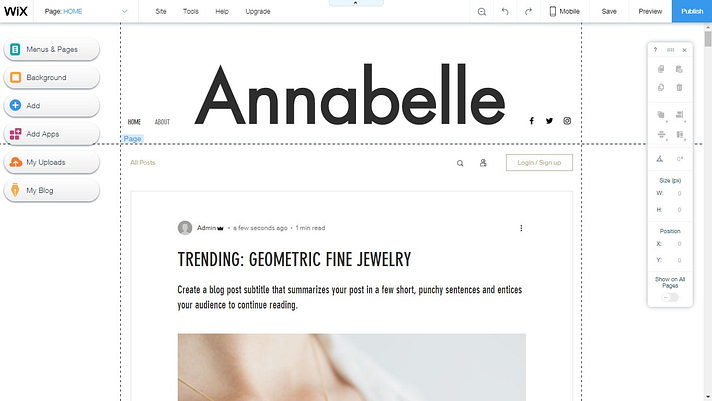
Wix is a free construction site that can be managed completely from the front end. The key advantage of this platform is that it offers drag and drop options so that you have nothing to deal with in the back-end. The style, which can be used both for beginners and for advanced, is very intuitive and modern.
What's good about Wix is that it includes free hosting, so you just have to organize the templates, select a template and you are all set. It offers a nice range of free and premium themes and models, including blogging for various purposes.
You can either let the Wix AI create a site for you, or design your blog yourself. This involves choosing a template and arrange templates by using the WYSIWYG Editor. To start the Wix blog, simply sign up and choose the site. You just have to find a lovely prototype to configure everything in the front-end in a live preview mode if you go for the second option.
You can add many things to the pages, from graphical widgets to backgrounds, menus, typography, shapes, video boxes, and much more. Click Publish and start blogging your stories when you think the website is ready. You can return to edit content blocks at any time after publishing.
The Wix interface:
2. WordPress (www.wordpress.org)
Best for…people who want to 100% own their blog and customize it. It’s perfect for setting up a serious website that you plan to work on long-term.
The king of free websites is WordPress.org. It is a free website, but afterward, you mostly have to create the site on your own. The program must also be hosted by you. A safer long-term approach is to pay a modest amount for a solid WordPress host, even though you can find some free WordPress host.
It's Bluehost's playing here. It is not just very cost-effective (on Simple Plan only $2.95 a month), but also features strong features like free domain name, 50GB disk space, free bandwidth, Free SSL, and 100MB of e-mail storage on an account. Right now, Bluehost is the cheapest responsive hosting for WordPress you will find out. Because you’re hosting the WordPress software yourself, you have full control over how your site looks and functions, as well as how you make money from your site. But the flip side is that the setup process is a little bit more hands-on.
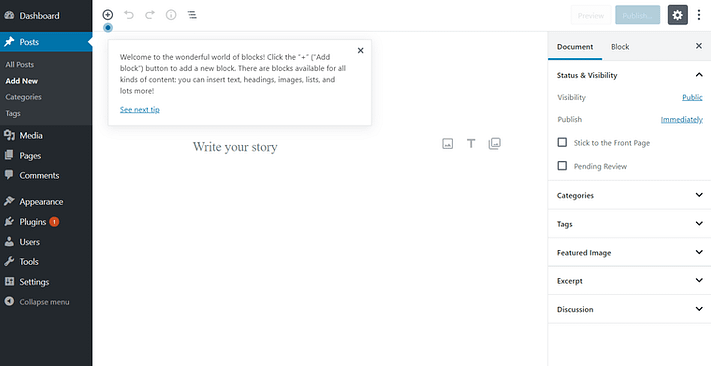
Here’s what the WordPress interface looks like when creating a new post:
On the other hand is WordPress.com, the other side of WordPress – a website primarily used by personal blogs because it's easy to set up and free (if you're fine without a domain name). However, the way you can customize the site is also very limited.
And especially if your intention is in some way to monetize your blog, you can't do that with the free WordPress.com edition.
We suggest that you start with Bluehost considering this. A money-back guarantee is valid for 30 days – only ask for a refund if you change your mind about the whole blogging test.
3. LinkedIn (www.linkedin.com)
Best for…business owners and professionals who want to reach a pre-existing audience. Although you’re not in control of the platform itself, it’s still a great marketing channel.
This one was definitely not coming you heard. When deciding which of the free blogging sites to pick, LinkedIn is not the first option for many people. However, it deserves attention! This is true!
There are two key reasons: the simple use of tools and the pre-existing public.
The second argument about that – the audience – is the best thing about LinkedIn's user base: they are very focused consumers, practitioners, and business owners. Indeed, over 30 million enterprises on LinkedIn have been confirmed to be involved. And for the sake of it, they're not just there. More data reveals that 94% of B2B marketers use the network as a leading source.
Briefly, LinkedIn is just a forum for shows, making it one of their best free blogging websites.
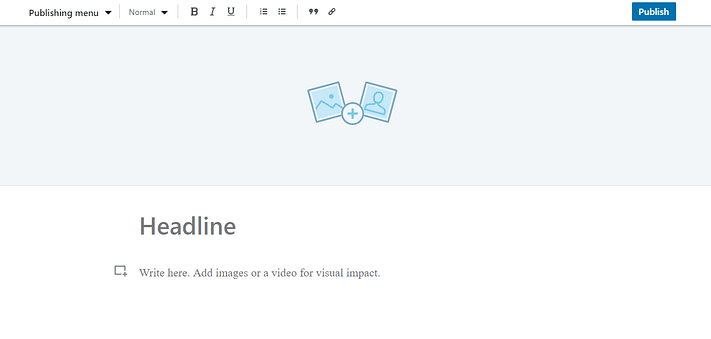
Publishing on LinkedIn is simple from a technological point of view. Just use the 'start a post' widget at the top of your page and go to your LinkedIn feed. Click "Edit LinkedIn article" to open the full-screen editing window to convert your status to a full post.
You can find all the editing resources you are familiar with here — for text formatting, image inclusion, and more.
The GUI with LinkedIn:
If you want to learn more about how blogging on LinkedIn works, read this in-depth guide.
4. Weebly (www.weebly.com)
Best for…non-techies who want some “regular website” functionality along with a blog (yes – just like Wix!)
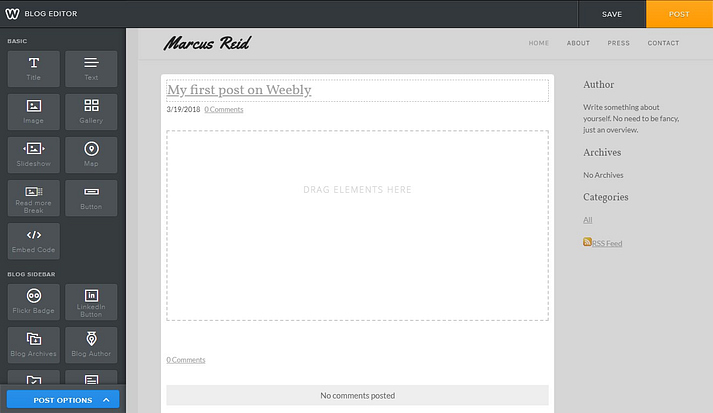
Weebly is another website builder that you can use to sell and view your website and blog. It's a bit like Wix, in that it offers drag-and-drop elements to a WYSIWYG editor. You may simply drag it to the page and customize it if you wish to add a particular button. The same is happening with photo galleries, slideshows, etc.
Weebly offers sidebars, media boxes, forms, publicity rooms, social media icons, subscription newsletters, and more. Also, the application provides integrated research and allows you to use your individual domain (for which you need to pay).
On the free schedule, 5 custom pages, 500 MB of storage, and ad spaces are open.
The interface for Weebly:
5. Medium (www.medium.com)
Best for…people who just want to write, are looking for access to a built-in audience, and don’t care about having their “own site”.
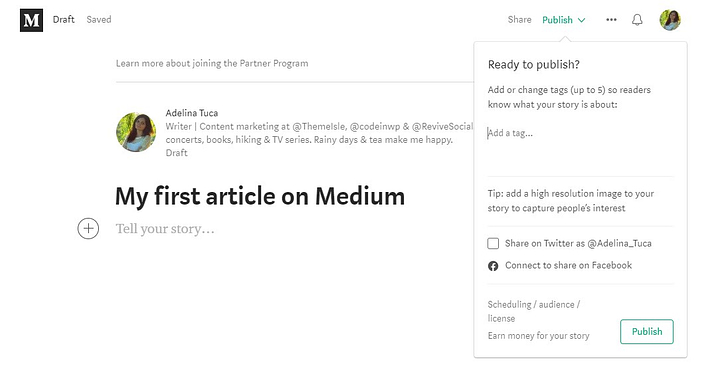
Medium is a multifunctional forum dealing with different subjects, through which anyone may write an account. The great benefit of the Medium is that your posts are open to a wider audience, as 60 million readers (*) visit a month from the website (and the number increases every year).
It's super easy to use – you just sign up and write. The downside is, however, that your whole content is medium. In other words, you don't create your own "space" like you do with WordPress. Read this article about WordPress and Medium variations. Read more.
Medium interface:
6. Ghost (www.ghost.org)
Best for…people who need something simple (simpler than WordPress, for instance) but offering a modern vibe at the same time.
This is another blogging platform similar to WordPress. You need to be paid hosting for fuel while you can download the Ghost software for free. DigitalOcean supports Ghost: it's inexpensive and comes with a bunch of good features to get you started.
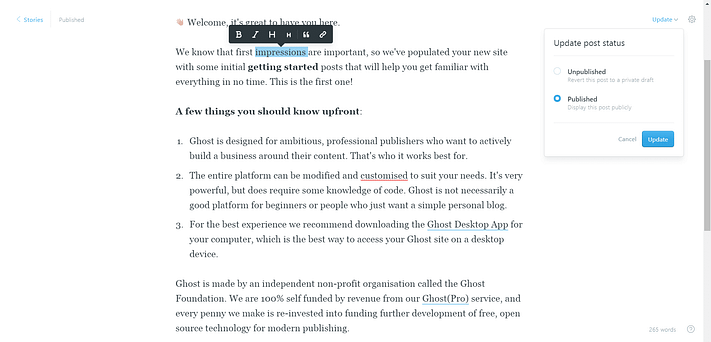
Ghost should be easy to build a post when your website is setup. The editor is quick and minimalist and gives a live preview of your screen text. You have a Medium vibe on the front end, so it's pretty. There is a sidebar with settings next to the editor screen, where you can pick your preferences.
The GUI of the Ghost:
7. Blogger (www.blogger.com)
Best for…people who want to write and aren’t concerned about owning their own site…but also wouldn’t mind making a little pocket money!
Blogger is one of the oldest free blog sites, but in recent years its popularity has declined.
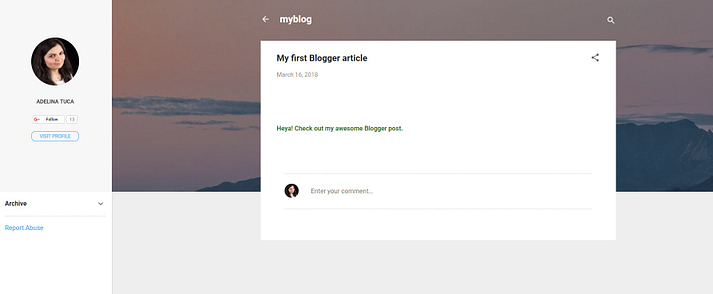
It is a sound solution for personal blogs, but not the best technical resource. It operates as well as the other host platforms: you must first build an account to use it. You have to select one of the default themes after creating it (which is simple), and can begin to write your thoughts down. This platform has a Google+-like GUI, and the editor looks like a Word tab.
Blogger provides a variety of themes for your choice, each with various skins, advanced color filters, and different minimalist gadgets (aka widgets). But nothing is too sophisticated or some advanced concept adaptation. Blogger usually has easy options to appear, so the emphasis is more on the written component. A pleasant part of this platform is the ad spaces that you can bring into your content.
Blogger's interface:
8. Tumblr (www.tumblr.com)
Best for…people who are into more short-form, image-focused content and don’t need any “regular website” functionality.
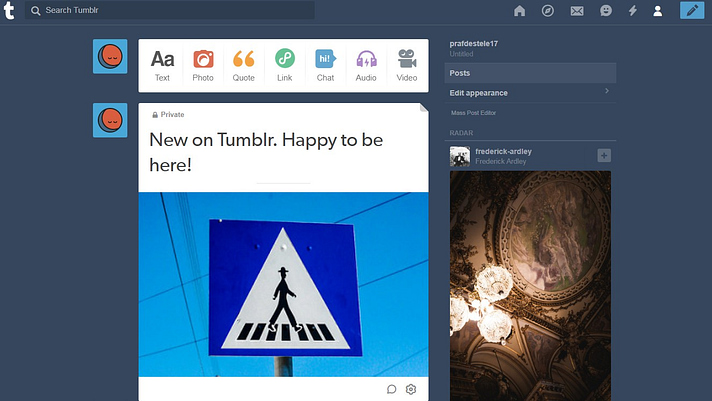
Tumblr is an initial free website for blogging. It's a bit 'moderate,' compared to others on the list. This is more digital or social media-like feedback than the rest of the channels mainly produced for publications. Tumblr's app is more playful and simple to start with – you can simply log in and then start publishing.
It offers multiple post formats for various types of content, just like a standard blogging site. The problem with Tumblr is, it is for your personal use and if you had business-oriented plans, it would not provide a great solution. It is simplistic, provides basic choices for customization, and has a social media environment, as I said before.
It allows you to view advertisements on your website, use affiliate links and integrate your blog with Google Analytics, although it is not designed for business purposes.
The GUI of Tumblr:
9. Joomla (www.joomla.org)
Best for…people who want to launch a simple personal blog, but care about details such as having a custom domain and being supported by a host. Moreover, if you’re more into old-school, basic website designs, Joomla will offer you that.
Joomla is WordPress.org-like but not as evident when you consider the free blog pages. The program is free like WordPress, but hosting and domain are mandatory. We recommend Bluehost, as with WordPress, because it is both very cheap and secure (and it includes a free domain).
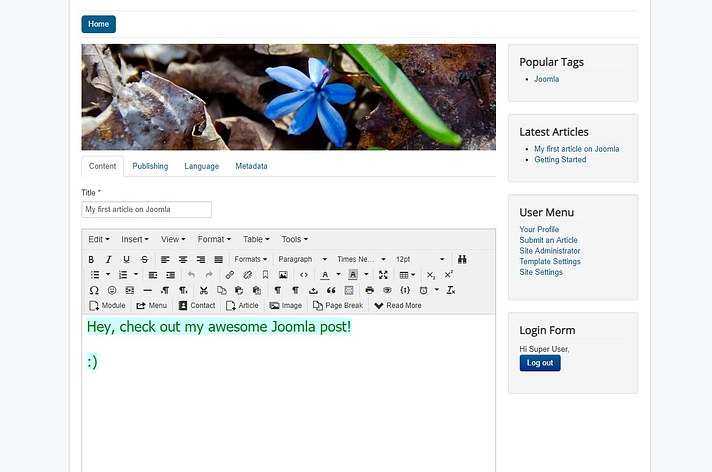
Joomla has a versatile GUI, which can not only be used on blogs but on complex websites (you can choose from a variety of templates and extensions to add custom functionality).
The platform offers a viewer-school editor which is somehow like Microsoft Word when it comes to ease of use. The font, color, height, emoticons, tables, or background can be picked. I say you sound like you're in a Word window with resources in the menu.
The editor of Joomla is tabs. First, you'll have to change the tab to pick the post types, tags, date, meta summary, keyword, etc. The first tab is the classic text window per se.
The GUI of Joomla:
10. Jimdo (www.jimdo.com)
Best for…people who are more comfortable editing the content directly on the front-end of the site. That, plus: you do not need a blog of high complexity.
Jimdo is more than a free blogging example. Blogs are, however, the most recommended in its free version provided the basic features of Jimdo. You can then easily build a website with Jimdo by reading some of the items (you take a fundamental questionnaire on the intent of your site). You will automatically build your website based on your choices after you review these options. Jimdo's drawback is that you cannot (at least not free) have a personalized domain and you cannot uninstall advertisements except when upgrading.
But an essential feature of Jimdo is that he creates a page: you make blog posts right through the front end and not through an editor (like the other blogs do). You need to go to each content box on a live page and edit it on the spot, without going back to another page. You may also change the footer and logo in the same manner. You have several choices when it comes to content elements: plain text, picture text, gallery of images, columns, buttons, etc.
You can do additional adjustments through the left sidebar including adding the post date, title, category, status (published or draft), description, and a preview of the image. In a nutshell, your item will be absolutely constructed of several separate items. Letter, picture, button... you have to order.
The GUI of Jimdo:

How to create a blog (in 6 easy steps)
- Choose your blog's descriptive name. Using Domain Wheel to classify your blog's ideal domain name.
- Purchase a domain and get blog hosting. We advise you to purchase Bluehost hosting ($2.95/month) and to free your domain name.
- Set up WordPress. WordPress can be installed with a few quick clicks via the Bluehost interface.
- Look for the right theme or design for WordPress. To fit your taste, customize your blog template.
- Get some WordPress plugins and add-ons that are indispensable. Provide your blog with additional features, such as social and image sharing.
- Start your blog and share your world voice. Start to write, share and discuss your favorite topic with your followers.


Comments
Post a Comment
Please comment below your thoughts and let me know if you have any doubts.